
Blog
Locations saisonnières : les professionnels face à de nouvelles règles
La réglementation des meublés de tourisme continue d’évoluer, et les professionnels du secteur restent particulièrement attentifs à son application, notamment par la voix du SPLM (Syndicat des Professionnels de la Location Meublée).
En première ligne : les conciergeries et les gestionnaires de locations saisonnières, qui doivent accompagner les propriétaires tout en s’adaptant aux nouvelles obligations, notamment en matière d’enregistrement et de contrôle des biens, avec la loi Le Meur, l’enregistrement obligatoire en mairie et les potentielles limitations applicables aux meublés de tourisme, comme à Bordeaux, par exemple.
Un autre risque réside dans la possibilité donnée aux maires de réduire le nombre de nuitées autorisées par an pour les résidences principales, de 120 à 90, sans changement de destination (autrement dit, sans avoir à devenir loueur professionnel !).
Pour les propriétaires et les professionnels du secteur, ces évolutions rappellent l’importance de bien connaître les règles applicables à leur logement, de rester informés et d’anticiper, surtout pour les propriétaires de biens situés dans différentes communes.
YouCheckInn suit ces évolutions pour vous tenir informés des changements susceptibles de concerner votre activité de location saisonnière ! 💡
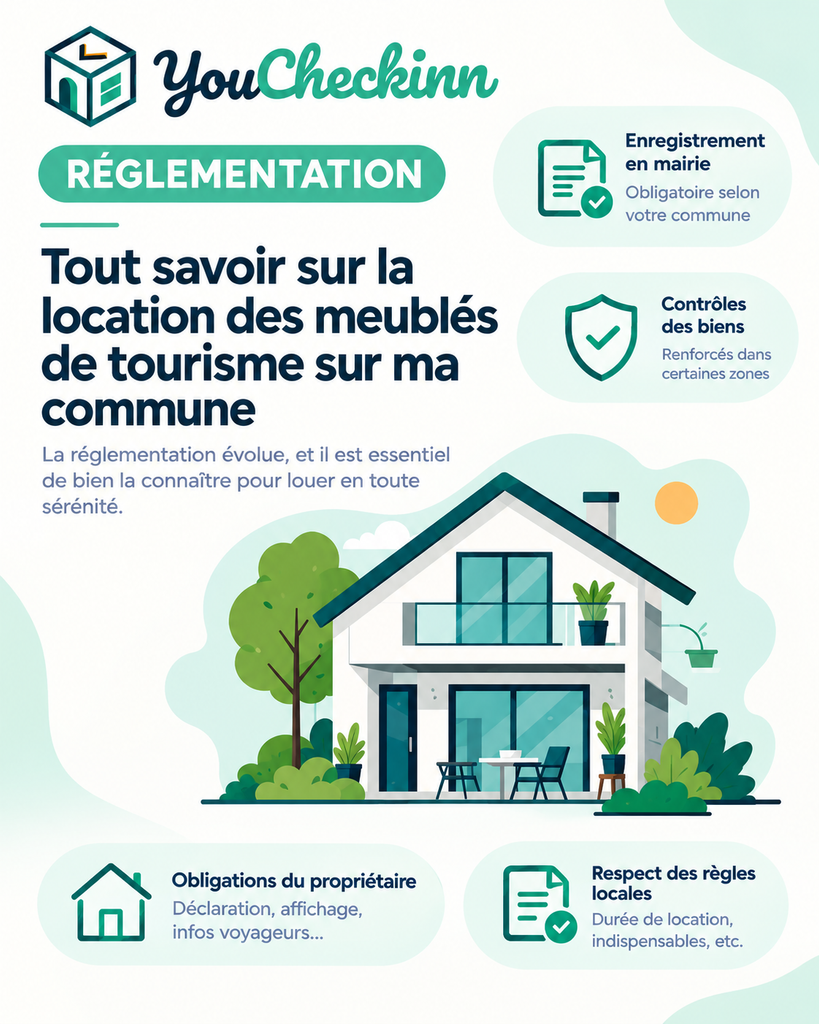
Seasonal rental: the tax regime is changing!
At YouCheckinn, we take pride in sharing the news that may affect our customers:
Owners of seasonal rentals: the taxation of tourist apartments continues to evolve in 2026.
One of the points to watch includes the difference between classified and unclassified properties. Classification can now have a significant impact on the applicable tax regime and the deductions you can benefit from.
For your information:
Since May 20, you must necessarily register your activity with the town hall
You can rent your tax residence for up to 100 days per year (90 in some communes including Paris)
Above €23,000 in revenue, you must register with the URSSAF
In other words, if you rent your accommodation on Airbnb, Booking, through a third party (agency/concierge) or directly, now might be the right time to check the status of your property and the rules that apply to your situation.
Subscribe to YouCheckinn to stay tuned to these developments and follow the news about seasonal rentals! 💡



YoucheckInn wins the Audience Award at IFTM!
What an adventure!
After being selected among the six finalists of the Orchestra Start-Up Contest, YoucheckInn won the Audience Award during the grand finale of IFTM!
This award has a very special meaning for our team, as it is above all the result of the support of everyone who came to watch the final, cheer us on and discover our solution. A huge thank you to everyone for your presence, your encouragement and your trust!
Thanks to you, YoucheckInn is leaving this edition with this wonderful Audience Award, as well as a great prize: a stand at the IFTM exhibition next year!
We would also like to warmly thank IFTM and Orchestra for organising this new edition of the Orchestra Start-Up Contest and for shining such a bright light on start-ups innovating in the tourism sector. This final and the discussions it has helped to create represent an important milestone for YoucheckInn.
Beyond the competition, this edition of IFTM was a real success for our team. We had the chance to meet numerous tourism professionals, chat with future partners, catch up with clients and discover new projects and new ideas. Every meeting, every discussion and every exchange enables us to move YoucheckInn forward and better understand the sector's needs.
Thank you to everyone who came to meet us at the exhibition, who took the time to chat with us and who are supporting us on this adventure.
This edition will therefore remain a very fond memory... and above all, as a date already set for next year!
See you next year at IFTM, with our own stand!
REPORT ON IFTM TOP RESA 2026
Back from IFTM Top Resa in Paris, full of energy and great memories 💚
For 3 intense days we were able to present @youcheckinn, meet tourism professionals, and discuss our solution.
To cap it all, we received a wonderful reward with The audience's favourite at the Start-Up Contest! 🏆🙏❤️
Thank you to everyone who came to meet us, listen to us and support us. A wonderful adventure that is only just beginning 🚀

#YouCheckInn #IFTM2026 #IFTMTopResa #StartupContest #TravelTech #Tourisme #Innovation #LocationSaisonniere #IA #Blockchain #ConfianceNumerique
IFTM 2026: YouCheckInn in the final of the Orchestra Start-Up Contest: come and support us!
ControlH chose the’IFTM 2026 to reveal the final version of YouCheckInn, son Certified Inventory of Fixtures Application.
Better still, following the candidate selection process, the jury chose YouCheckInn to be one of the 6 finalists of the 3rd edition of the Orchestra Start-Up Contest, organised as part of the IFTM trade fair.
This selection proves to us that our mission has been deemed important: to digitalise and simplify the holiday rental experience by offering a solution designed to meet the new habits of travellers and the needs of tourism professionals.
After several stages and facing numerous innovative start-ups in the sector, we now have the opportunity to present YoucheckInn during the grand final of the competition.
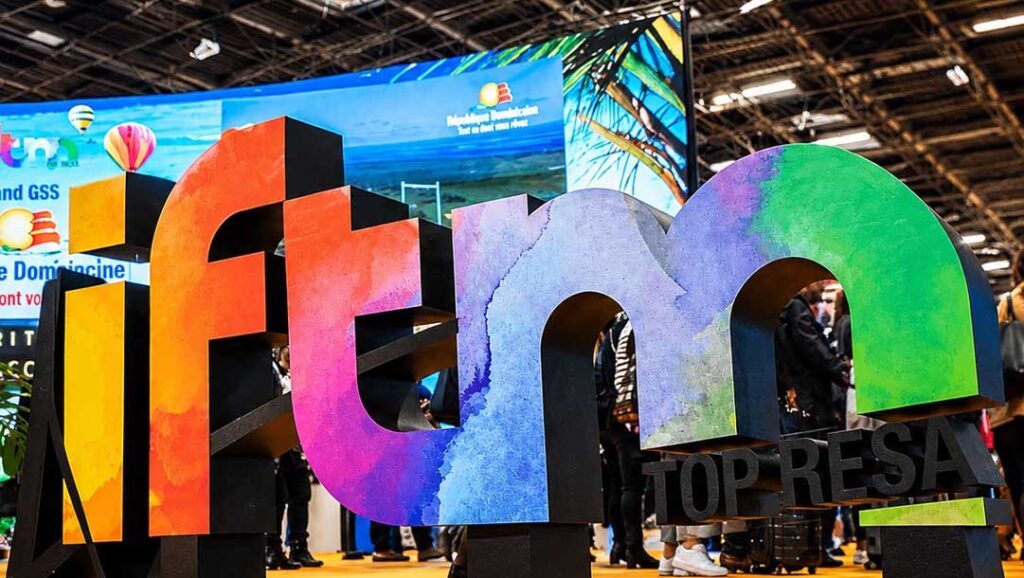
A wonderful opportunity to showcase our vision, our solution and the challenges we aim to address in the tourist accommodation sector.
📅 See you on Tuesday 15 September 2026 from 17:00 to 18:30 in the Arena Hall by Uzbekistan
For this final stage, we need you! Tourism professionals, partners, clients, friends or the curious: come along to watch the final and cheer on YoucheckInn! Your presence and support will be invaluable in helping us carry our project through to victory.
So, if you're at IFTM on the 15th of September, see you at the Arena by Uzbekistan at 5pm! We're counting on you to make some noise and support YoucheckInn!🔥
YOUCHECKINN: THE SIMPLIFIED INVENTORY OF FIXTURES
With YouCheckinn, the inventory of fixtures becomes a mere formality!🔑
Intuitive, simple, AI-driven and blockchain-enabled, YouCheckinn property inventories become a genuine link between landlord and tenant.🤝🏽
Why YouCheckinn?
Last Out / First In lease system
🔐 Tezos blockchain to secure rentals on both sides
AI assistance for greater efficiency and simplicity
📈 Flexible subscription, for single-property owners as well as agencies and concierge services managing dozens or hundreds
👉 Request your demo at www.youcheckinn.com
To see and see again on the channel YouTube YouCheckInn

YouCheckInn is taking part in IFTM 2026, the premier event for tourism and travel professionals in France.
From 15th to 17th September 2026, we will be in Paris, Porte de Versailles – Hall 1, to meet those who bring tourism to life every day: accommodation professionals, managers, concierge services, travel agencies, TravelTech players and partners in the sector.
For YouCheckInn, this exhibition will primarily be an opportunity to chat, make new connections and present our solutions dedicated to holiday rentals.
For three days, we will discuss very practical topics: simplifying property inventories, better securing rentals, limiting disputes and improving the guest experience.
IFTM 2026 will bring together more than 32,000 tourism professionals, 1,650 brands, 177 destinations and over 450 stands.
This new edition will focus on the theme:
«The value of travel, let's reveal together what creates impact.»
A great opportunity to reflect together on the future of tourism, and its economic, human and sustainable value.
Will you be at IFTM 2026?
Come and meet the YouCheckInn team, discover our solution and discuss your needs and the realities of your business with us.
Will you be at IFTM 2026? Book an appointment with our team and come discover how YouCheckInn simplifies and secures holiday rental management.
From 15th to 17th September 2026
Paris, Porte de Versailles – Hall 1
Stand YouCheckInn : U001-6
YouCheckInn is a brand of Control H – @Control H.
#YouCheckInn #IFTM2026 #Tourism #SaisonalRental #TravelTech




YOUCHECKINN EXPLAINS THE MAJOR TRENDS TRANSFORMING SHORT-TERM RENTALS AND TOURISM IN 2027
The major tourism trends in 2027 deeply transform the short-term rental. With YouCheckInn, hosts and property management companies have a solution that simplifies the management of schedule of condition, contracts, security deposits and traveller information in order to offer a smoother, more secure and more reassuring experience. Faced with travellers' new expectations, YouCheckInn supports professionals in developing their practices.
Tourism is evolving rapidly. Today, travellers are no longer just looking for accommodation, but for a simple, seamless and reassuring experience.
Autonomy has become essential: simplified check-in, information accessible via smartphone, rapid communication and a frictionless journey. At the same time, owners and management agencies want to save time thanks to tools that centralise inventories of fixtures, contracts, deposits and guest information.
Another trend is being confirmed: holidaymakers expect local recommendations and a more authentic experience, while demanding greater transparency and security.
At the home of YouCheckInn, we are convinced that technology must remain at the service of humanity. By simplifying holiday rental management and streamlining the traveller journey, it allows hosts to focus on what matters most: offering a quality welcome and creating memorable stays.
#YouCheckInn #Tourism2027 #Short-TermRental #TravelTech #TravellerExperience




YOUCHECKINN HELPS YOU IMPROVE THE CHECK-IN EXPERIENCE FOR YOUR SHORT-TERM RENTAL TENANTS
The arrival experience has become an essential element in short-term rentals. With YouCheckInn, professionals have all the necessary tools to offer their tenants a simple, fluid, and reassuring arrival. By centralising inventory reports, contracts, security deposits, digital welcome books, and useful information for the stay, YouCheckInn simplifies every stage of arrival and helps to offer a better experience from the very first minutes.
The first few minutes of a stay often set the tone for the holiday. A simple, smooth, and well-organised arrival immediately inspires confidence, while a delay, a lack of information, or a complicated key handover can quickly tarnish the experience.
Today, travellers expect more autonomy and simplicity. They want easy access to practical information, to discover their accommodation peacefully, and to start their stay stress-free.
For accommodation providers, getting this first impression right has become a real lever for satisfaction and loyalty. A well-thought-out arrival process also helps to reduce calls, misunderstandings, and disputes.
At YouCheckInn, we believe that the welcome begins even before the door is opened. By centralising inventory reports, contracts, security deposits, digital welcome packs, and useful information for stays, we help professionals offer a smoother, more reassuring, and more pleasant arrival experience.
Because a successful stay often starts with a successful arrival.
#Check-in #Short-term-let #Seasonal-let #Customer-experience #Inventory-check




YOUCHECKINN EXPLAINS THE CHANGE IN AIRBNB SERVICE FEES AND WHAT HOSTS NEED TO KNOW
YouCheckInn explains the change in Airbnb service fees and what hosts need to know before this new policy comes into effect. As of 13 October 2026, Airbnb is changing its commission model in Europe. This development will have a direct impact on the income of property owners, management companies and all short-term rental professionals using the platform.
Until now, service fees were shared between the traveller and the host. From now on, a single commission of 15,5 % will be applied to the host, while the traveller will directly see an all-inclusive price, as on Booking.com.
What impact for landlords?
Up until now, many hosts could only afford to pay around 3 % in service fees. Under this new model, those who do not adjust their rates will see their net income fall.
So, owners have two choices:
- maintain their current prices and accept a drop in profitability; ;
- increase their prices to protect their revenues, at the risk of being less competitive.
Why many hosts prefer to wait
Since this announcement, Airbnb support groups have been very active. Many hosts are recommending not to immediately validate the switch to the new system.
In fact, as soon as the option is accepted, the new rates apply to dates still available in the calendar. Reservations already confirmed are not modified, but future nights put up for sale are. Many hosts therefore prefer to wait for the last few weeks before October 13th to analyse their pricing strategy.
A battle that is getting closer to Booking.com
With this development, Airbnb is moving even closer to Booking.com's business model: a more transparent displayed price for travellers and a commission borne directly by the host.
This harmonisation will make it easier to compare prices between platforms and will strengthen competition between major online booking players.
YouCheckInn's analysis
This evolution recalls one reality: platform rules can change rapidly. For accommodation providers, it is becoming essential not to depend on a single booking channel.
The best strategy remains to diversify booking sources, develop direct bookings, and digitise the entire traveller journey.
At YouCheckInn, we support property owners and concierge services with tools that simplify inventory checks, contracts, deposits, check-ins/check-outs, and guest welcome, while allowing them to maintain control of their business, regardless of platform changes.